
New Non-GamStop Casinos in 2026: Launches, Licences, Evaluation
 Available in GB
I have been tracking new casino launches in the offshore segment for nine years, and 2026 is the most active year I have recorded for UK-targeted non-GamStop sites. The launch density correlates with two structural drivers: the Curaçao LOK reform that took effect on 24 December 2024 has stabilised the licensing pathway for new operators, and the rising UKGC compliance cost is shifting more operator groups toward offshore-first launch strategies. The forecast that offshore stake could exceed £33 billion by 2028, representing roughly 19% of online gambling in the UK, signals the market opportunity attracting these launches. This piece works through why 2026 is a launch spike year, what white-label platforms enable, where new launches are licensed, what the sister-brand cluster effect looks like, and how to evaluate a brand with no operational history.
The full picture is in our explainer on non-GamStop casinos.
Why 2026 Is a Launch Spike Year
The structural drivers behind the 2026 launch density are clear when you look at the calendar of regulatory changes that landed across 2024 and 2025. The Curaçao LOK regime, in force from 24 December 2024, replaced the old NOOGH master licence structure with direct sub-licences from the Curaçao Gaming Authority. From 1 July 2025 only direct CGA licences became valid for operators, which simultaneously simplified the regulatory pathway for new entrants and pushed existing operators to formalise their licensing. The Anjouan licensing framework consolidated through the same period — B2C licences at €17 828 annually, B2B-recognised licences at €9 500 — providing an alternative jurisdiction for operators not pursuing Curaçao.

The cost side is equally important. Remote gaming duty rose from 15% to 21% on 1 April 2026, with the remote betting duty scheduled to rise to 25% from 1 April 2027. Combined with the cumulative cost of UKGC compliance — affordability checks at the £150 threshold from February 2025, the £5 spin cap from April 2025, the various licence conditions and continuous-monitoring obligations — the gap between operating in the UKGC regulated segment and the offshore segment has widened materially. New operator groups looking at the maths are increasingly choosing offshore-first launches with optional UKGC expansion later, rather than UKGC-first.
The combination of stabilised offshore licensing and rising UKGC costs produces the launch wave currently visible. Through 2025 I tracked an average of 12 to 15 new non-GamStop sites per month from established operator groups, with another five to ten launches per month from smaller groups or first-time operators. The 2026 figure is running ahead of that — closer to 20 to 25 launches per month from all sources combined, with the largest share concentrated in the first half of the year.
Our top casino picks for the UK
- x3betBonus: Welcome Pack 100% Up to £1.000 + 200 Free Spins · Payout speed: 1-3 business days
- NightWinBonus: £900 + 400 free spins · Payout speed: 1-3 business days
- Revery PlayBonus: 100% up to€1,000+ 100 FS · Payout speed: 1-3 business days
- DieselwinBonus: Welcome Pack 250% up to £4000 + 200 FS · Payout speed: 1-3 business days
- ChanzeBonus: Slots Welcome Bonus #1 200% up to €500 · Payout speed: 1-3 business days
- BritsinoBonus: Welcome Package – Get your £2,200 + 2,000 FS · Payout speed: 1-3 business days
- SlotoSportBonus: 500% up to £ 10 200+ 777 FS · Payout speed: 1-3 business days
White-Label Platforms and B2B Suppliers
The technical infrastructure behind most new launches is a white-label platform supplied by a B2B operator. Rather than build a platform from scratch — which requires gaming technology, payment integration, KYC infrastructure, RG tooling and many months of development — new operators license a complete platform from a B2B supplier and customise it with their own branding, content selection and promotional configuration. The white-label model lets a new brand launch in weeks rather than years.

The major white-label platforms serving UK-accessible offshore operators are SoftSwiss, EveryMatrix, NetEnt Group’s platform business, Pronet Gaming and several smaller suppliers. Each platform serves dozens to hundreds of operator brands simultaneously, with the platform supplier handling the technical operation while the brand operator handles marketing, customer service and promotional design. The white-label structure also handles payment integration, with the platform’s existing relationships with payment providers extending to new brand instances at low marginal cost.
The B2B platform also typically supplies game content via aggregator integration. SoftSwiss’s casino platform integrates with hundreds of studios via the supplier’s own aggregator stack, and EveryMatrix’s CasinoEngine provides similar coverage. A new brand launching on either platform inherits access to the full game catalogue without negotiating individual studio deals. The trade-off is that the white-label brand has limited differentiation on game content — most operators on the same platform see similar libraries — so the differentiation moves to UI, promotional structure and customer experience.
Licence Origin of Recent Launches
The licensing origin distribution for 2026 launches breaks roughly 65% Curaçao, 25% Anjouan, and 10% other jurisdictions (Malta-licensed offshore brands targeting non-UK markets but accepting UK players, Kahnawake, smaller Caribbean and Pacific jurisdictions). The Curaçao share has held steady through the LOK transition, while the Anjouan share has grown from 5% in 2024 to its current level on the strength of lower licensing fees and faster issuance timelines for new operators.
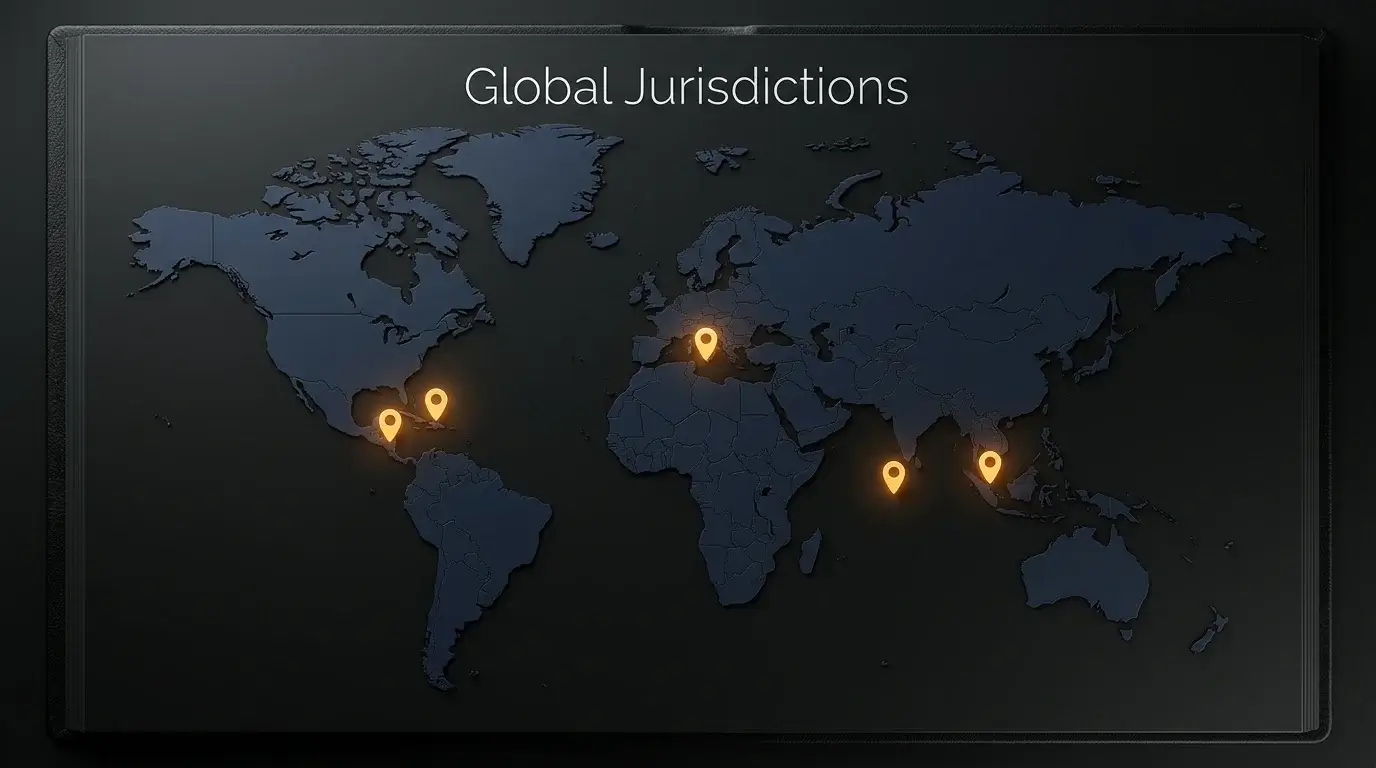
Curaçao LOK direct sub-licences offer the strongest regulatory framework among offshore jurisdictions for UK-accessible operators. The licence terms include mandatory deposit limits, session reminders, RG tooling and complaint mechanisms. Anjouan licensing offers lower fees and faster issuance but with somewhat thinner regulatory infrastructure on the consumer-protection side. The choice between the two is partly cost-driven and partly philosophical, with operators emphasising consumer protection (often US- or EU-aligned operator groups) preferring Curaçao and operators emphasising launch speed and cost efficiency preferring Anjouan.
The “other” category covers a handful of niche jurisdictions and edge cases — Kahnawake-licensed sites that historically attracted UK traffic, small-island licences used by individual operator groups, and unlicensed sites operating with no formal regulatory anchor. The unlicensed category is small but exists; these sites carry maximum risk for players, with no dispute resolution mechanism and no regulatory recourse. The presence of unlicensed sites in the broader offshore landscape is one of the reasons evaluating licence status is the first step in assessing any new brand.
Sister-Brand Clusters: The Network Effect
The sister-brand cluster is the structural pattern that defines most large offshore operator groups. A single operator group, often visible only to industry analysts, runs 10 to 50 brands on a shared platform with shared backend, shared payment processing, shared customer service and shared KYC infrastructure. The brands have distinct visual identities, names and promotional structures but share the underlying operational reality. The Bitstarz / 7BitCasino group, the SlotV ecosystem, the BetSoftGaming-affiliated brands, and several other groups operate clusters of this size and shape.

The implication for new launches is significant. Most “new” brands launched in 2026 are not actually new operators — they are new brands launched within existing clusters. The operator group has experience, infrastructure and reputation; the brand instance is new. The trustworthiness of the new brand is therefore largely a function of the underlying group rather than the brand’s own track record. Identifying which group a new brand belongs to provides much more useful evaluation signal than the new brand’s own marketing.
The cluster effect also means that bonus arbitrage across brands within the same cluster typically fails. The group’s account systems link brands, and a player who has accounts at Brand A through Z within the same cluster cannot claim a new welcome bonus at Brand W if they have already claimed one at Brand A. The detection is platform-layer and runs through device fingerprinting, payment method matching and account history.
How to Evaluate a Brand with No History
The evaluation framework for a new brand begins with licence verification. The licence number, jurisdiction and issuing authority should be published in the site footer and verifiable on the regulator’s public register. A Curaçao LOK sub-licence is verifiable on the CGA’s published list; an Anjouan licence is similarly verifiable. A brand without verifiable licence information is high-risk by default, regardless of presentation quality.

The second evaluation step is identifying the underlying operator group. Sister-brand identification is rarely advertised, but signals include the platform branding visible in payment processing, the customer-service email domain, the terms-and-conditions document structure (often identical across cluster brands), and the language and tone of the promotional copy. A new brand that maps to an established cluster carries the cluster’s reputation; a new brand that maps to an unknown operator carries higher uncertainty.
The third evaluation step is payout track record. New brands have no payout history by definition, but the underlying group typically does. Public-facing complaint forums, the operator group’s posture on dispute resolution, and the licence jurisdiction’s enforcement record all feed into a usable assessment. The conservative approach for any new brand is to test with smaller deposits and verify withdrawal performance before committing to larger stakes.
What the Launch Wave Actually Means
The 2026 launch density reflects structural shifts in the offshore segment rather than transient market enthusiasm. The combination of stabilised Curaçao licensing, lower-cost Anjouan options, mature white-label platforms and rising UKGC compliance costs makes offshore-first launch strategies more attractive than at any previous point. The implication for players is that the choice set is expanding, with both quality and quantity of new brands rising. The evaluation skill — licence verification, cluster identification, payout track record — has become more rather than less important as the choice set grows. The next dimension where 2026 launches differ most from earlier generations is mobile-first product design, with PWA and native-app strategies replacing browser-only thinking; mobile non-GamStop casinos and apps covers that ground.
Check the licence before depositing: the jurisdictions.

What does ‘sister brand’ actually mean in the non-GamStop ecosystem?
A sister brand is one of multiple casino brands operated by a single underlying operator group on a shared platform infrastructure. The brands have distinct names, visual identities and marketing presence but share backend systems, payment processing, KYC infrastructure and customer service teams. From the player perspective the brands appear independent; from the operator group’s perspective they are instances of the same operation with different surface presentations. Most large offshore operator groups run 10 to 50 sister brands simultaneously.
Should new operators be avoided until they have a payout track record?
Not necessarily, but the evaluation needs to focus on the underlying operator group rather than the new brand itself. A new brand launched within an established cluster inherits the cluster’s reputation and infrastructure. A new brand from an unknown operator carries higher uncertainty by default. The conservative approach for any new brand is to test with smaller initial deposits and verify the withdrawal process before committing larger stakes — the licensed jurisdiction provides a fallback complaint channel, and observed payout performance on small amounts is the most useful signal of operational reliability.
This material was created by the OFFSTAKE team.
Related posts

Terms of Use for a UK Casino Information Site

Top-Rated Online Casinos UK: Amatic Games Explained