The Curaçao LOK Reform Explained: What 2024–2026 Changes Mean for UK Players
 Available in GB
Nine years of watching offshore licensing, and I can count on one hand the moments where a regulator actually rewrote the rulebook. The Curaçao LOK reform is one of them. On 17 December 2024 the local parliament voted 13 to 6 in favour of the National Ordinance on Games of Chance, and seven days later it became law — a piece of legislation that quietly buried the master-licensor model the offshore industry had relied on since the late 1990s.
For UK players landing on a non-GamStop cashier page in 2026, this matters more than it looks. The little licence badge in the footer no longer means what it meant in 2023. The chain of accountability has changed, the body issuing the paperwork has changed, and the timeline for transition is brutally short. I want to walk you through what actually happened, what’s still happening, and how to read a Curaçao licence today without falling for a stale review written before the reform.
The full picture is in our explainer on non-GamStop casinos.
The old Curaçao system and its master licensors
Before December 2024 the Curaçao licensing world ran on a four-house structure that almost nobody outside the industry could name. Four master licensors — Cyberluck, Curaçao Interactive Licensing, Gaming Curaçao, and Antillephone — held the only direct authorisations from the island, and they in turn issued sub-licences to thousands of operators. If you played at a Curaçao-licensed casino any time in the past twenty years, the sticker in the footer almost certainly traced back to one of those four.
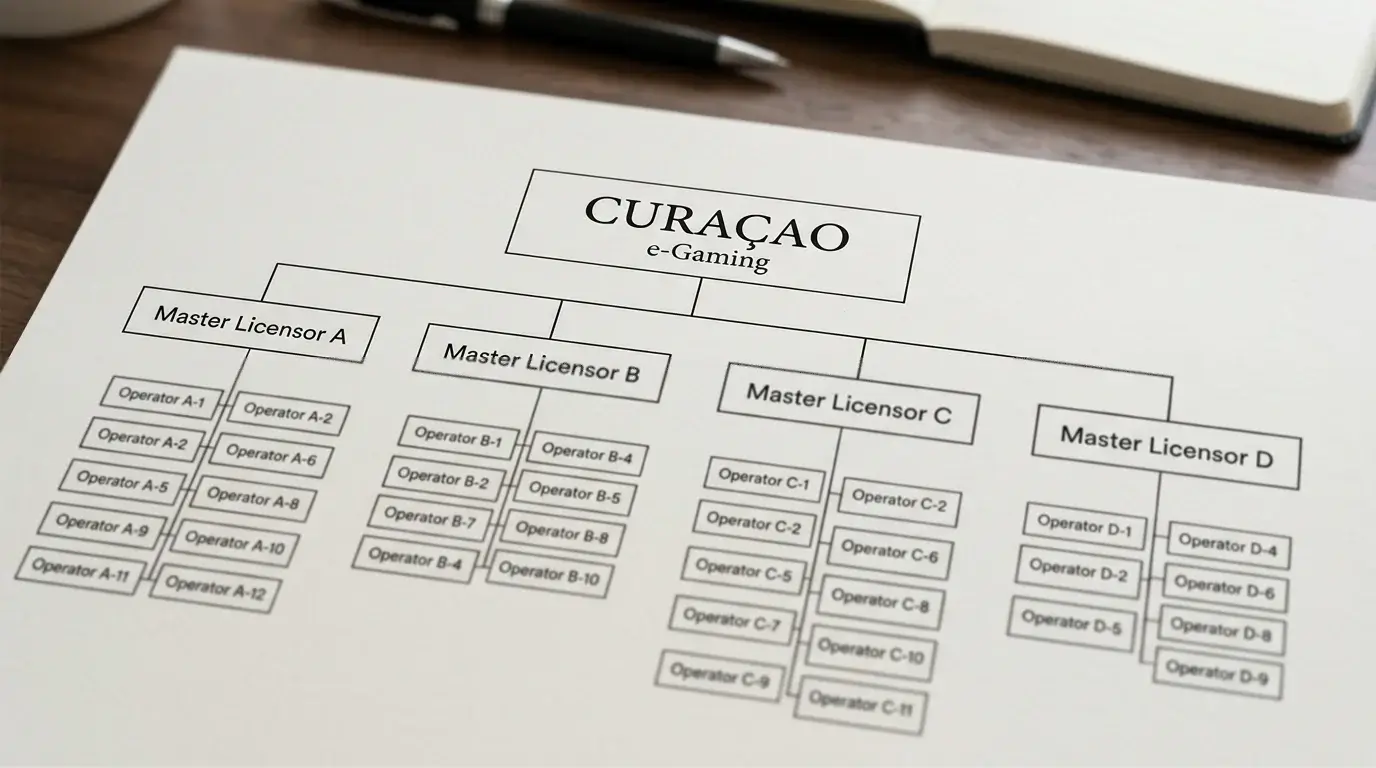
The arrangement worked commercially because it scaled. A new brand could be live in weeks, paying a flat sub-licence fee that was tiny compared to a B2C licence in Malta or Gibraltar. It also created a famous reputational problem: when a player had a dispute, the master licensor was the entity that should have stepped in, and in practice many never did. Complaints went into a black hole. Forums filled up with frustrated players holding screenshots of the master’s logo and getting no reply.
That structure is what the LOK reform set out to dismantle. The new model concentrates licensing in a single body — the Curaçao Gaming Authority — and removes the buffer of sub-licensing. From the regulator’s point of view, this is a credibility play. From an operator’s point of view, it’s a cost shock and a compliance shock arriving on the same Tuesday.
LOK timeline from December 2024 to June 2025
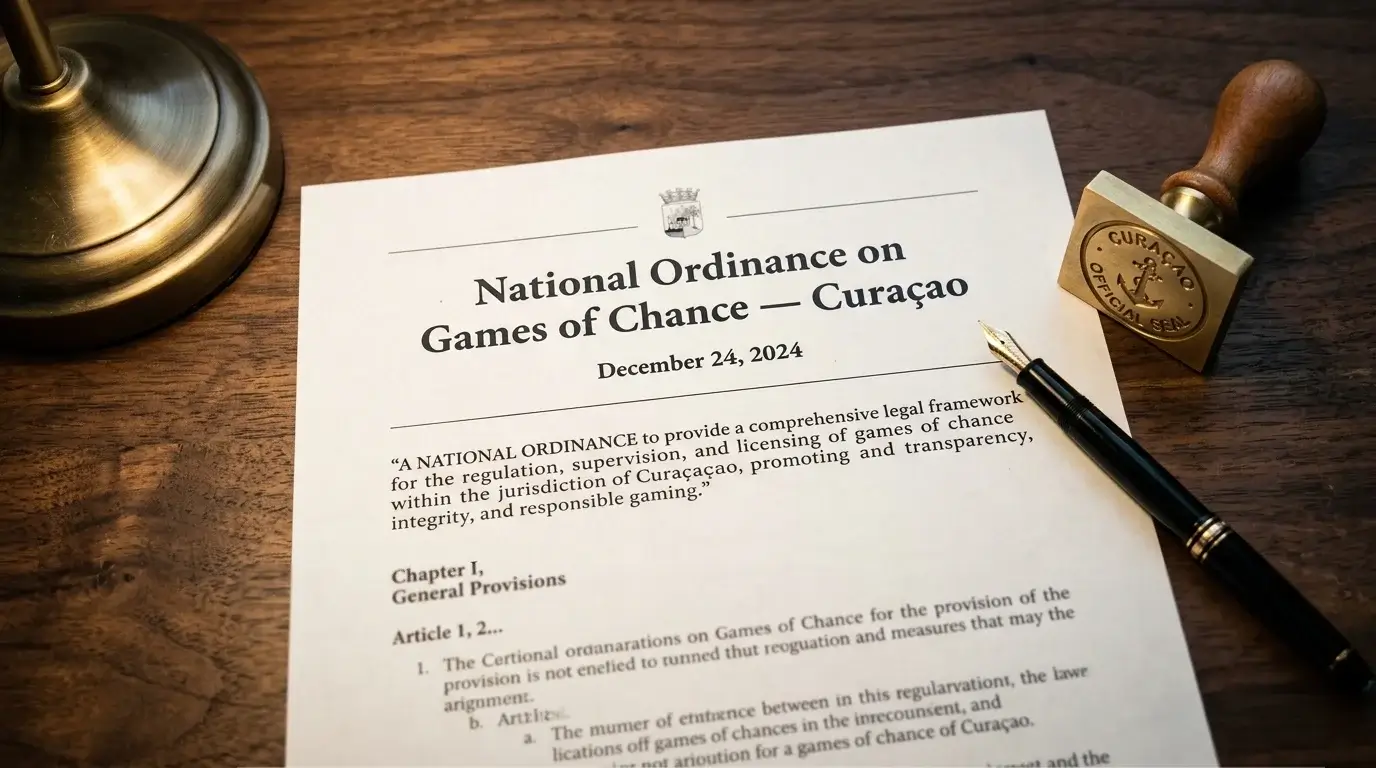
The thing I keep telling people about the LOK timetable is that it gave operators almost no breathing room. Six months. That is the window between the ordinance coming into force on 24 December 2024 and the deadline of 24 June 2025, after which the old NOOGH sub-licences ceased to be valid — and the only legitimate Curaçao authorisation became a direct licence issued by the Curaçao Gaming Authority.
Operators who had banked on the master-licensor route had to file an application with the CGA, demonstrate beneficial ownership, lodge a security deposit, prove segregated player-fund accounts, and produce policies on AML, responsible gambling and player dispute resolution. None of that existed in the old sub-licence regime in any meaningful enforceable form. Several casinos that had operated under Gaming Curaçao or Antillephone for years simply did not pass — and either rebranded under a different jurisdiction or went dark altogether.
You can still see the residue of this in 2026. Walk through enough non-GamStop cashier footers and you will spot brands proudly displaying a NOOGH sub-licence number that, on paper, expired in June 2025. Sometimes that is sloppy footer copy from a brand that has since obtained a CGA direct licence and never updated the page. Sometimes it is something more uncomfortable: a site running on a defunct authorisation, betting that no player will read the small print carefully. The licence verification step I cover further down is the only reliable way to tell those two scenarios apart.
CGA direct licence and what changes for operators
A direct CGA licence is a heavier instrument than the old NOOGH paper. There are essentially two formats — a B2C licence for operators serving players, and a B2B licence for game suppliers, payment integrators and platform vendors. Both require disclosure of ultimate beneficial owners, criminal-record certificates for directors, audited financials, and a technical-audit certificate covering RNG fairness, game integrity and platform stability.

The change of substance is responsibility. Under the master-licensor model, when something went wrong at a casino the master could plausibly say it was a downstream issue. Under direct licensing, there is one regulator and one operator on the paperwork, and the regulator can act on a player complaint without sub-licensor intermediation. The CGA has a complaint portal, takes filings in English, and is bound to acknowledge complaints inside a stated window.
I would not pretend this turns Curaçao into the MGA overnight. The CGA’s enforcement track record is short, the body itself is small, and many operators are still finding their feet inside the new framework. But the architectural distance between Curaçao in 2023 and Curaçao in 2026 is genuine. The headline shift is that there is now a single regulator with a single rulebook, and there is paper trail accountability where there used to be air.
Our top casino picks for the UK
- x3betBonus: Welcome Pack 100% Up to £1.000 + 200 Free Spins · Payout speed: 1-3 business days
- NightWinBonus: £900 + 400 free spins · Payout speed: 1-3 business days
- Revery PlayBonus: 100% up to€1,000+ 100 FS · Payout speed: 1-3 business days
- DieselwinBonus: Welcome Pack 250% up to £4000 + 200 FS · Payout speed: 1-3 business days
- ChanzeBonus: Slots Welcome Bonus #1 200% up to €500 · Payout speed: 1-3 business days
- BritsinoBonus: Welcome Package – Get your £2,200 + 2,000 FS · Payout speed: 1-3 business days
- SlotoSportBonus: 500% up to £ 10 200+ 777 FS · Payout speed: 1-3 business days
Practical impact on UK players
I get asked some version of this question every week — does the Curaçao reform make non-GamStop casinos safer for British players, or is this an industry tidy-up that doesn’t reach the cashier? Honest answer: a bit of both, depending on which operator you land on.
What is genuinely better is the disputes channel. If a casino with a CGA direct licence holds a withdrawal beyond stated processing windows, ignores KYC submissions, or applies bonus terms retroactively, you have a regulator you can address a complaint to in writing, with a paper licence number that traces back to one entity. Under the old four-master system, this was structurally hard to do. Under CGA, it is at least a defined process.
What has not changed is the underlying legal picture for the UK side. The Curaçao licence is not recognised by the UK Gambling Commission. Anything you experience on a non-GamStop casino runs under Curaçao law, not English consumer-protection law, and UK ADR providers like IBAS and eCOGRA have no jurisdiction over the operator. That sits in a wider context the industry doesn’t enjoy talking about — Yield Sec puts the illegal share of UK online activity at around nine per cent in the first half of 2025, having stood at less than half a per cent five years earlier. Ismail Vali, who runs Yield Sec, has not been shy about where that growth comes from: he has described the illegal market as approaching ten per cent share, achieved through “the cynical exploitation of two vulnerable audiences: children and self-excluded gamblers on the GAMSTOP scheme.” That framing is uncomfortable but factually accurate, and a reform of Curaçao licensing doesn’t change it. A better-regulated offshore casino is still an offshore casino. The reform raises the floor on the operator side; it doesn’t extend UK consumer rights across the border. If you’d like a parallel example of a licence that sounds reasonable in marketing copy but carries hard restrictions UK players should know about, the Anjouan licence and its UK restriction clause is worth a few minutes of your time.

How to verify a CGA licence on a site
The verification step is the one piece of due diligence I never skip, and it takes about ninety seconds. The Curaçao Gaming Authority maintains a public register of B2C and B2B licence holders, listing the legal entity name, the licence number, and the licence status. Open the casino’s footer, find the licence number — it usually appears as a string starting with OGL or a similar prefix — and cross-check it against the CGA register.
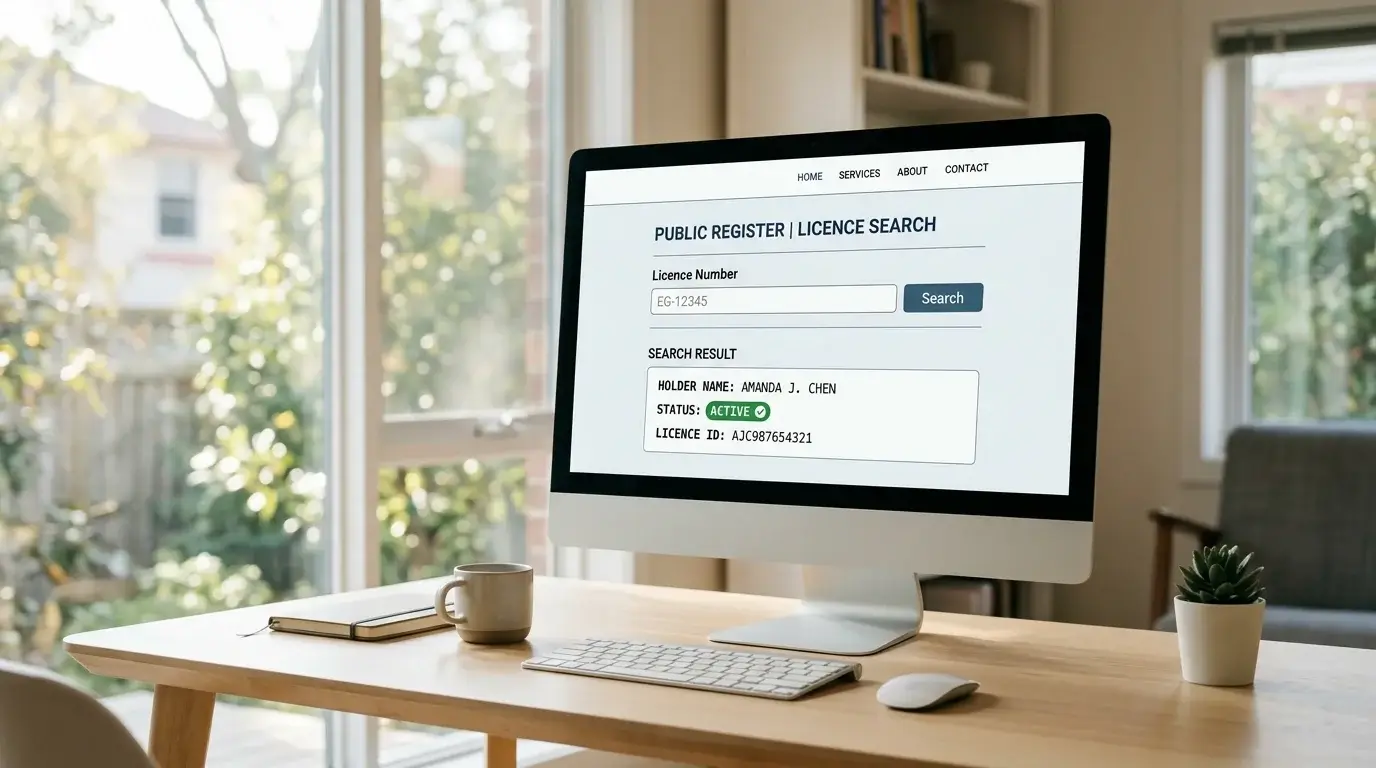
Three things are worth checking, not just one. First, that the licence number exists on the register at all. Second, that the legal entity displayed in the footer matches the entity holding the licence — operators sometimes run multiple brands under a single licence, and the holder will be the parent company rather than the casino name itself. Third, that the licence status reads as “active” rather than “lapsed” or “under review.” A brand that was active six months ago might be in a different state today, and the register is the only authoritative source for that snapshot.
The other licence UK players meet: Anjouan.
If any of those three checks fails, the footer is decoration rather than documentation. That is not a verdict on the operator — there are reasons a casino might be mid-application or mid-renewal — but it is a signal that the standard chain of accountability is missing at the moment you would need it.
Did the LOK ordinance abolish all old Curaçao sub-licences immediately?
No — the ordinance came into force on 24 December 2024, but old NOOGH sub-licences remained valid until 24 June 2025. From July 2025 onwards, only direct licences issued by the Curaçao Gaming Authority are recognised. Operators that did not transition by that deadline lost their authorisation, even if their footer still displays the older sub-licence text.
Is a CGA-licensed casino safer than an old master-licensor sub-licensee?
Architecturally, yes — a CGA direct licence concentrates accountability in a single regulator with a public register, a complaint portal and disclosed beneficial ownership. That is a material upgrade on the old four-master model. It is not, however, equivalent to UKGC protection. The licence is recognised in Curaçao, not in the United Kingdom, and UK dispute-resolution services do not have jurisdiction over the operator.
This material was created by the OFFSTAKE team.
Related posts

Terms of Use for a UK Casino Information Site
Top-Rated Online Casinos UK: Amatic Games Explained