
Low Deposit Non-GamStop Casinos: How £5 and £10 Cashiers Compare
 Available in GB
A friend asked me last winter why anyone bothers running a casino account with a £5 minimum deposit when the wider context — the £5 stake cap on UKGC online slots from April 2025, the £2 cap for 18-to-24-year-olds from May 2025 — has reshaped the upper end of the market so visibly. The answer is the same answer to most questions in this space: the low-deposit segment exists because a meaningful slice of players want to play with small money, often as a controlled-bankroll discipline, and the offshore operators have figured out that catering to that segment is cheaper than chasing high-rollers.
The mechanics of a £5 deposit at a non-GamStop site are not quite the same as the mechanics of a £5 deposit at a UKGC operator, and the differences are worth knowing before the first transaction.
The full picture is in our explainer on non-GamStop casinos.
Minimum deposit norms at offshore sites
The typical minimum deposit at a non-GamStop casino in 2026 sits between £10 and £20 for fiat methods, and slightly higher for crypto. Lower minimums exist — I have seen £5 cashiers and a few operators advertising £1 minimums — but they tend to come with caveats, and they are a smaller share of the market than the marketing makes them sound.
The reason most operators set their floor at £10 rather than £5 is processing economics. A fiat card transaction has a fixed cost on the operator’s side — the payment-processor fee can be 1.5 to 3 per cent of the transaction plus a fixed component of around twenty pence. On a £5 deposit, that fixed component is a meaningful portion of the operator’s net, so operators set the floor at a level where the deposit is worth processing. Crypto deposits have lower per-transaction operator costs but higher fixed network fees on the player side, which pushes the floor up from the other direction.

What you actually see in the cashier varies by payment method, by operator, and sometimes by player segment — some operators run lower floors for new accounts as part of a welcome funnel and raise the floor for subsequent deposits. Read the cashier page before assuming the marketing number applies to your situation.
Card and e-wallet floors
Among fiat methods at non-GamStop sites, the lowest floors usually appear on debit-card and e-wallet methods. Debit card minimums of £10 are common, and a handful of operators run £5 floors for cards. Skrill and Neteller often have £10 minimums, though some operators set them lower. Bank transfers, where supported, usually have higher floors — £20 to £50 — because the processing overhead is higher relative to the deposit size.
The drift downward in deposit minimums on the offshore side correlates loosely with regulatory tightening on the UKGC side. The financial risk assessment threshold of £150 net deposit per 30 days, introduced in February 2025, has shifted some smaller-volume play offshore because players who don’t want to engage with affordability checks don’t always want to play less — they sometimes want to play the same amount somewhere the check doesn’t apply. The £10 deposit at an offshore site is sometimes a deliberate ladder around an account that would have hit the FRA at the UKGC site instead.
Whether that pattern serves the player well is a separate question. The point here is that the low-deposit market on the offshore side has structural drivers behind its growth, not just marketing decisions, and the floors reflect what the audience is actually doing.
Crypto floors and network-fee arithmetic
Crypto deposit floors are governed by a different logic. The operator doesn’t pay a network fee — that’s on the depositor — but the player has to. On a £5 Bitcoin deposit, if the network fee is £3, the effective deposit-to-spend ratio is terrible. Operators usually set the minimum at a level where the network fee is a small share of the deposit, which means BTC minimums of £20 or so, and lower minimums on cheap networks like Lightning, Tron and Litecoin.
The maths is worth doing for any player thinking about crypto floors. A £10 USDT deposit on TRC-20 costs about a dollar in network fees, which is bearable. The same £10 deposit on ERC-20 during a busy day can cost £8 in gas, which is not. The operator will list both networks at the same minimum but the effective cost is very different. The pattern I see in player questions is that the network mismatch is the most common avoidable cost in the low-deposit segment — players send small amounts on expensive networks and lose a meaningful portion of the deposit to fees they didn’t have to pay.

For deposits below £20, choose the cheap network or use a fiat method. The crypto rail is best at moderate to large sizes, where the network fee becomes a negligible share of the transaction.
Low deposits and bonus eligibility
The catch on low-deposit accounts is that the welcome bonus terms usually do not apply at the floor of the minimum deposit. Most welcome offers have a minimum deposit-to-qualify amount that is higher than the cashier’s general minimum — a casino with a £5 deposit floor often has a £20 or £25 minimum to qualify for the welcome package. Players who deposit £5 first time around end up with a balance of £5 and no bonus, and the welcome-eligibility window may have expired by the time they deposit again.
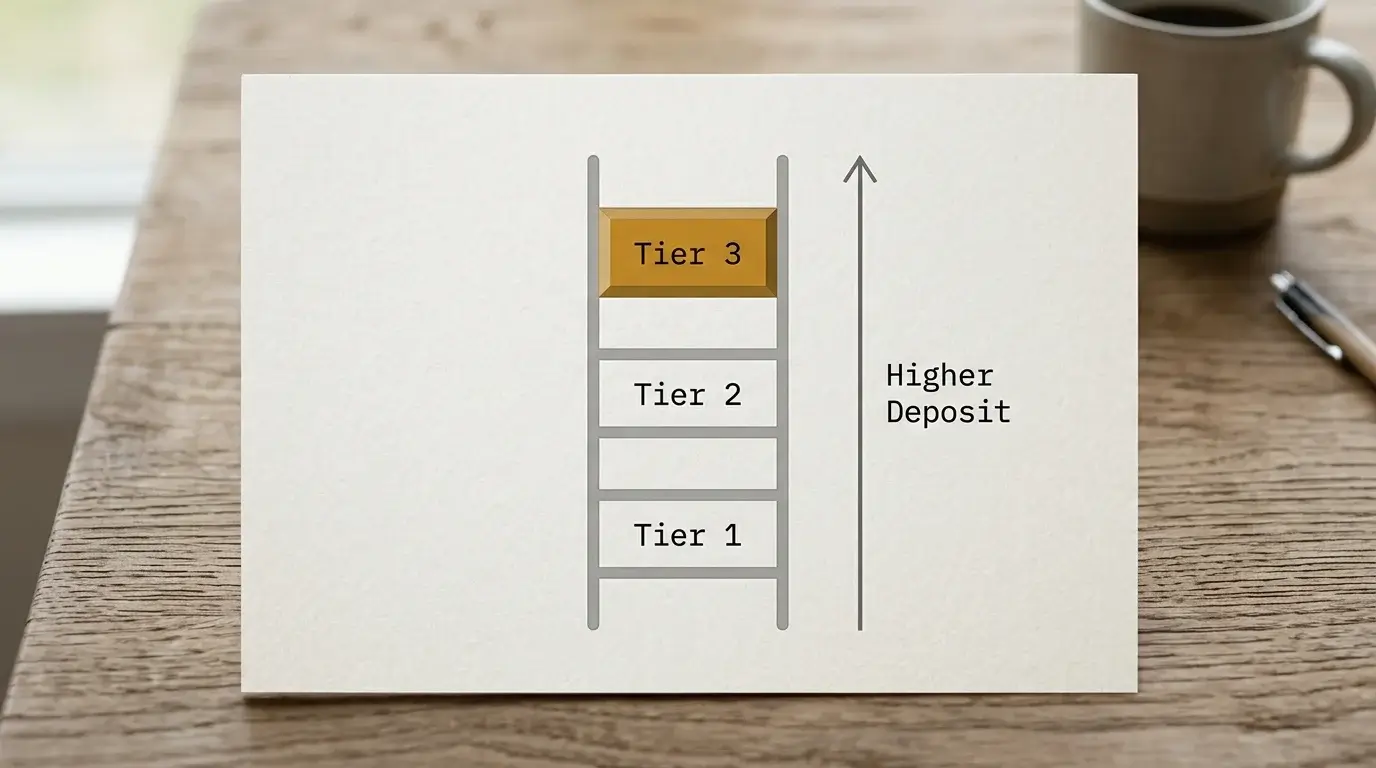
The terms vary. Some operators apply the welcome bonus on any first deposit above the cashier floor, which is the rare honest offer. Others set the qualifying threshold higher, sometimes substantially. Read the bonus terms before depositing rather than after, because the eligibility is set at the moment of the deposit and cannot usually be retroactively applied. A small first deposit followed by a “real” qualifying deposit later sometimes works and sometimes doesn’t, depending on the operator’s interpretation of “first deposit.”
The wider patterns of how welcome offers actually pay out — what spin value comes attached, what wagering applies, what max-win cap sits on the back of small-stake bonuses — are detailed in the broader picture of free spins at non-GamStop casinos, which is the right next chapter if you intend to build a low-deposit strategy around bonus mechanics.
Our top casino picks for the UK
- x3betBonus: Welcome Pack 100% Up to £1.000 + 200 Free Spins · Payout speed: 1-3 business days
- NightWinBonus: £900 + 400 free spins · Payout speed: 1-3 business days
- Revery PlayBonus: 100% up to€1,000+ 100 FS · Payout speed: 1-3 business days
- DieselwinBonus: Welcome Pack 250% up to £4000 + 200 FS · Payout speed: 1-3 business days
- ChanzeBonus: Slots Welcome Bonus #1 200% up to €500 · Payout speed: 1-3 business days
- BritsinoBonus: Welcome Package – Get your £2,200 + 2,000 FS · Payout speed: 1-3 business days
- SlotoSportBonus: 500% up to £ 10 200+ 777 FS · Payout speed: 1-3 business days
How low deposits affect wagering
The other thing worth understanding about low deposits is how they interact with wagering requirements if a bonus is in play. If the deposit qualifies for a bonus, the wagering is usually based on the bonus amount or the deposit-plus-bonus combined. On a £5 qualifying deposit with a 100 per cent match and 40x bonus-only wagering, the player has to wager £200 to clear the bonus — which on a typical slot at an effective £0.50 stake means 400 spins, a long session for a small bankroll.
What a small deposit unlocks: the bonus mechanics.
The maths produces a paradox players sometimes don’t anticipate. A small deposit with a bonus requires a long session to clear, but the small deposit gives no cushion against the natural variance of that long session. The probability of finishing wagering with funds intact on a high-variance slot is meaningfully lower for a £5 deposit than for a £50 deposit, even though the wagering multiplier is the same. The bonus looks attractive at the moment of acceptance and produces a poor expected outcome over the population of players accepting it. The behaviour-economics literature has a name for this — and operators have known about it since the second wave of welcome bonuses were designed in the mid-2010s.

Why are crypto deposit minimums often higher than card minimums?
Because the player pays the network fee, not the operator. On a small crypto deposit, the network fee is a large share of the transaction value, and operators set their minimum at a level where the deposit is still useful after fees. Card transactions have lower fixed costs to the player, which lets operators set lower floors. The same operator might run a £10 card minimum and a £20 crypto minimum on the same cashier, and the difference is entirely about who is paying the cost of the rail.
Do low deposits qualify for the full welcome package or a reduced version?
Usually neither — the welcome package has its own minimum-deposit-to-qualify that is typically higher than the cashier’s general floor. A casino with a £5 minimum deposit might require £20 or £25 to qualify for the welcome bonus. A deposit at the cashier floor will credit normally but will not trigger the bonus, and the welcome offer often has a time window that does not extend to a second deposit. Reading the bonus terms before the first deposit avoids this entirely.
This material was created by the OFFSTAKE team.
Related posts

Terms of Use for a UK Casino Information Site

Top-Rated Online Casinos UK: Amatic Games Explained