
Credit Card Casinos Not on GamStop: The 2020 Ban and What Changed
 Available in GB
April 2020 was the moment when paying for online gambling with a UK credit card became a legal impossibility on UKGC-licensed sites. Six years on, the conversation I keep having with players is the same one — they understand the ban exists, they understand it applies to UKGC operators, they want to know whether an offshore site can lawfully accept their Visa credit card, and whether that makes any sense for them as a player. The answer is more nuanced than the marketing copy suggests, and there is a clean structural reason it works that way that I want to lay out properly.
The wider regulatory context for any of this is the same context that produced the £5 stake cap for online slots from April 2025 and the £2 cap for 18-to-24-year-olds from May 2025 — the UKGC has been tightening for five years, and the credit-card ban was an early piece of that tightening that the offshore segment has been working around for a long time.
The full picture is in our explainer on non-GamStop casinos.
What the 2020 ban actually says
The credit-card ban is a UKGC operating-licence condition. It applies to any gambling operator holding a UK Gambling Commission licence and serving customers in Great Britain, and it prohibits the acceptance of credit-card payments for gambling activities. The condition was added on 14 April 2020, after a consultation that found a meaningful share of problem gamblers were using credit cards to fund losses they could not afford from current income.
The technical mechanism is straightforward. UKGC operators are required to block any transaction where the funding source is identified as a credit card. The identification happens at the payment-processor level — the processor sees the bin range of the card, knows whether that bin range corresponds to a credit or debit product, and either rejects the transaction or routes it back to the operator for rejection. UK debit cards still work without issue. Prepaid cards depend on the operator’s interpretation but generally work. Credit cards do not.
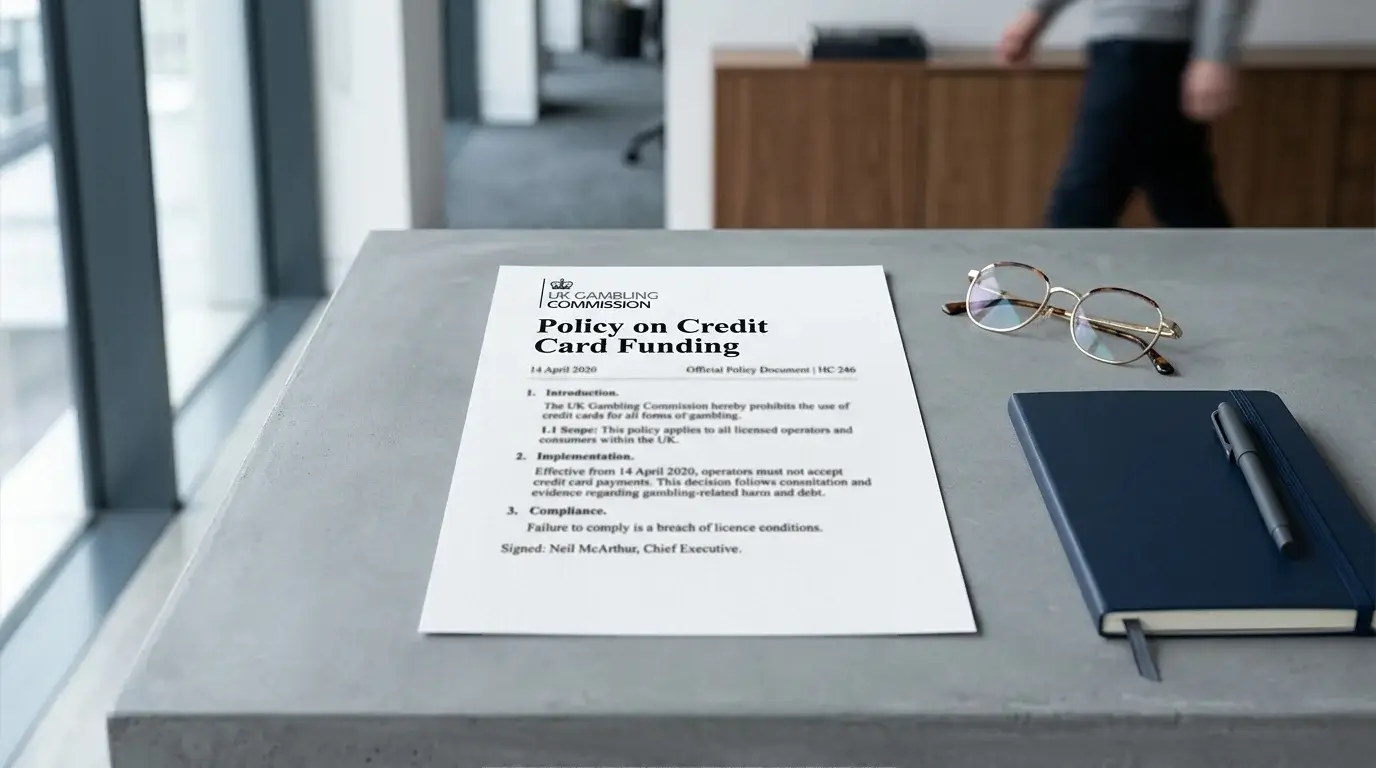
The legal architecture is important because it answers a question players sometimes ask — whether the ban applies to them as cardholders. It does not. The ban is a duty on the operator, not on the player. Using a credit card to deposit at a casino that lawfully accepts one is not an offence on the player’s side. It just isn’t available at UKGC-licensed venues.
Our top casino picks for the UK
- x3betBonus: Welcome Pack 100% Up to £1.000 + 200 Free Spins · Payout speed: 1-3 business days
- NightWinBonus: £900 + 400 free spins · Payout speed: 1-3 business days
- Revery PlayBonus: 100% up to€1,000+ 100 FS · Payout speed: 1-3 business days
- DieselwinBonus: Welcome Pack 250% up to £4000 + 200 FS · Payout speed: 1-3 business days
- ChanzeBonus: Slots Welcome Bonus #1 200% up to €500 · Payout speed: 1-3 business days
- BritsinoBonus: Welcome Package – Get your £2,200 + 2,000 FS · Payout speed: 1-3 business days
- SlotoSportBonus: 500% up to £ 10 200+ 777 FS · Payout speed: 1-3 business days
Why offshore sites can still accept credit cards
The reason the ban does not extend to offshore casinos is exactly the same reason the UKGC stake caps don’t extend to them — those operators do not hold UK Gambling Commission licences, and the operating-licence conditions UKGC enforces apply only to its own licensees. An offshore casino licensed in Curaçao or Anjouan is subject to the rules of those jurisdictions, neither of which restricts credit-card funding.
What that means in practice is that the legal possibility of paying by credit card at an offshore casino exists, and the technical capability exists at the payment-processor end. Whether any given offshore casino actually accepts credit cards in 2026 is a different question, and the answer is “most do, but the route is increasingly indirect.” Many UK card issuers — the banks that issue the credit cards — have added their own blocks on transactions to offshore gambling jurisdictions, independently of the UKGC’s operator-side rule. The card transaction may be rejected by the issuer rather than the operator. The exact same Visa credit card might fund a deposit at one offshore casino and fail at another, depending entirely on the payment processor the casino uses and the issuer’s view of that processor.
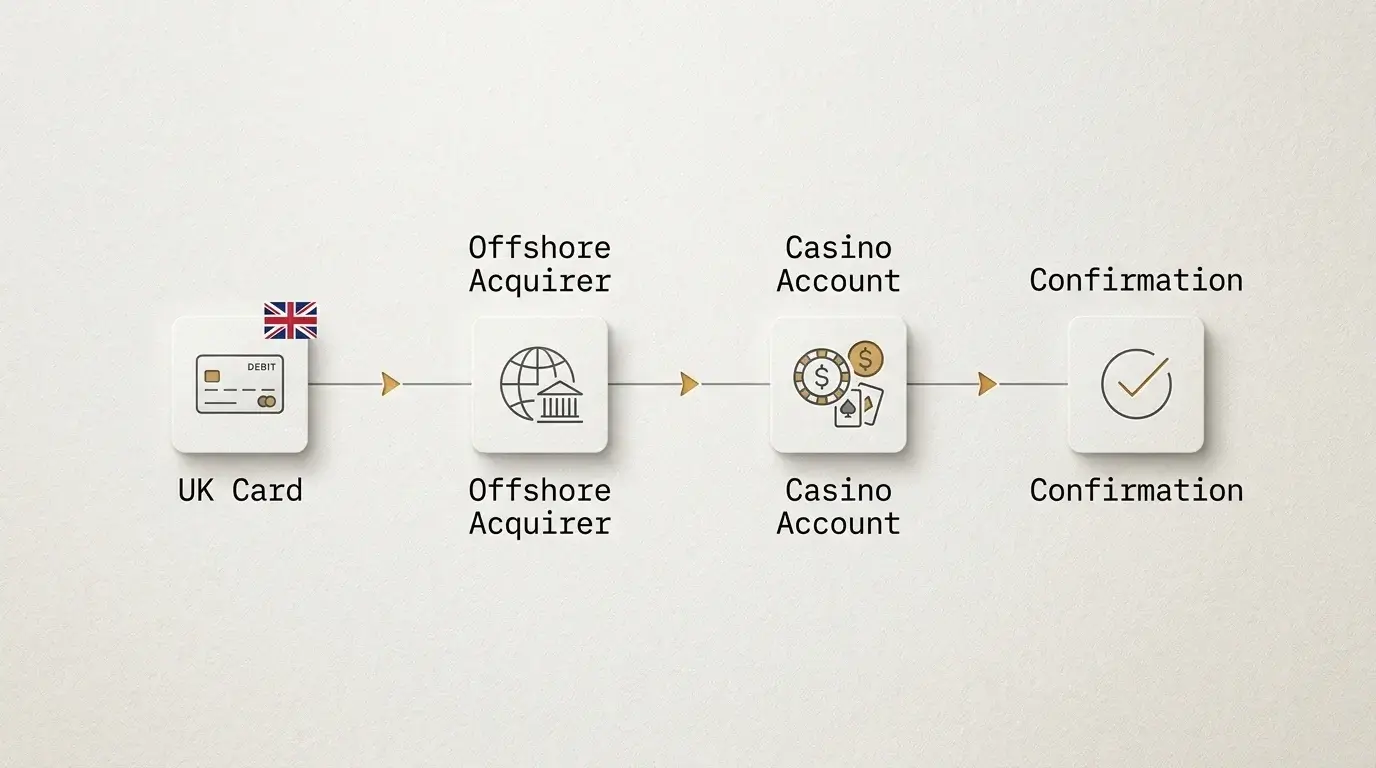
This is the structural fact that explains the migration story — the move of UK gambling activity away from the UKGC-regulated 97 per cent of 2019 down to roughly 92 per cent by 2025, with credit-card play sitting as one of several factors that helped that drift along. Players who funded losses with credit before April 2020 didn’t simply stop. Some adjusted. Some moved.
Cash advance fees and interest implications
The thing most credit-card guides don’t tell you clearly is that the way a casino transaction is treated by your card issuer determines what it actually costs you. Two issuers can accept the same casino transaction and present you with very different bills. The reason is the cash-advance question.
Some UK credit-card issuers categorise gambling transactions as cash advances rather than purchases. The classification triggers a fee — typically 3 per cent of the transaction or £3, whichever is greater — and starts interest accruing immediately from the transaction date, without the usual interest-free purchase grace period. A £200 deposit treated as a cash advance might cost £6 in fees on day one and start incurring 28 per cent APR interest the same day. The same £200 treated as a purchase costs nothing on day one and incurs no interest if cleared inside the statement period.

Which side of that line your issuer falls on depends on the bank and on the specific card product. Barclaycard, Lloyds, and some Halifax cards have historically treated gambling transactions as cash advances. American Express has its own rules that vary by product. Newer challenger-bank cards tend to apply the gambling-as-cash-advance rule by default. The only reliable way to know is to read the terms of your specific card or to check a recent statement after the first transaction.
Issuer-side blocks by major UK banks
Independently of the cash-advance fee question, many UK issuers have added outright blocks on credit-card transactions to offshore gambling jurisdictions. The blocks are voluntary on the bank’s part — there is no UKGC duty requiring them — and they exist as a consumer-protection measure on top of the operator-side ban that UKGC has imposed.
The picture is patchy. Barclays, Lloyds, HSBC and Santander all run blocks of varying strength, and the strength varies over time. NatWest has historically been more permissive. Most challenger-bank credit-card products run blocks by default and require the cardholder to actively contact support to lift them, which usually involves a conversation that ends with the bank declining to lift the block. The effective outcome is that for a meaningful share of UK credit-card holders, the offshore route is closed at the issuer level even if the operator is willing.
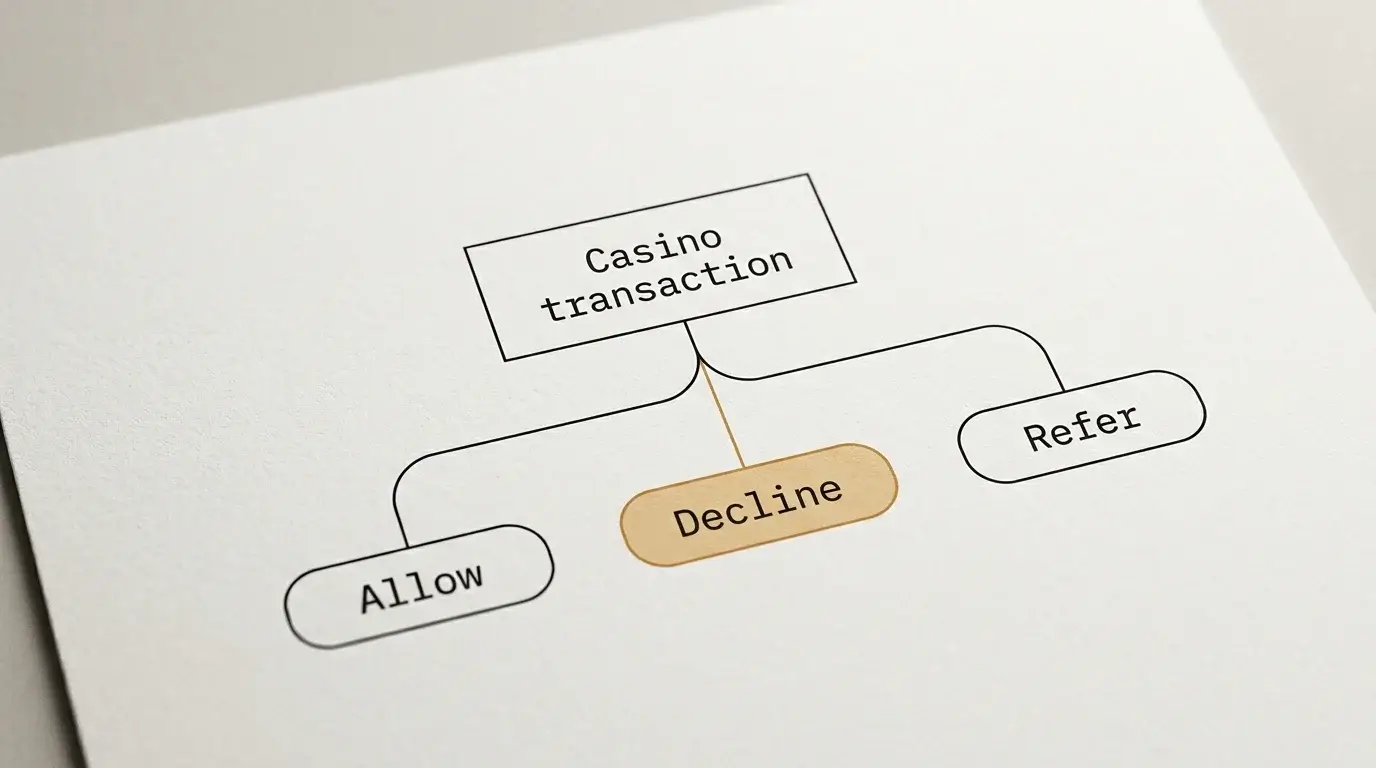
The block is applied at the MCC-7995 layer for casinos that route transactions under that code. The same loophole that lets some offshore operators slip past the Revolut gambling block — routing through a non-7995 merchant category — applies here too. A credit-card transaction routed under a generic e-commerce code can clear an issuer block that would have caught a 7995 transaction.
Risks of credit-funded gambling
I am not going to lecture, but I do want to be precise about the financial risk. Funding a gambling balance from credit is structurally different from funding it from current account in two ways that matter. First, the cost of the funding itself — fees and interest if the transaction triggers a cash-advance classification, ordinary purchase interest if it doesn’t but the balance isn’t cleared. Second, the size of the available bankroll — credit limits are usually multiples of monthly income, and a player drawing on a credit line is exposed to losses substantially larger than they could absorb from current income alone.
The bank that blocks most of them: Revolut deposits.

The combination of those two facts is why the UKGC banned the practice on regulated sites in 2020 in the first place. The offshore segment has the same player population and the same risk profile; what it lacks is the same operator-side rule against credit. If the credit-funded loss arrives, the credit-funded debt arrives with it, and the chargeback and refund options that exist for fraud claims on the credit-card rail do not apply to a freely authorised gambling transaction. The same caution that applies to any deposit method applies here, only multiplied by the additional cost of the credit itself. The picture changes again when the card is being presented through a tokenised mobile wallet rather than as a raw card number, and the mechanics of Apple Pay and Google Pay at non-GamStop casinos are worth looking at as a separate piece of that puzzle.
Is using a UK credit card at an offshore casino illegal for the cardholder?
No — the UKGC credit-card ban is a duty on the operator, not on the cardholder. Using a credit card to deposit at a casino that lawfully accepts one (which excludes all UKGC-licensed sites) is not an offence under English gambling law. What it can violate is your card issuer’s own terms and conditions, particularly if the issuer prohibits gambling-related credit transactions. That is a contractual question with your bank, not a criminal one.
Why do some UK issuers treat casino deposits as cash advances?
Some issuers classify any gambling-related card transaction as a cash advance because the historic risk profile of those transactions matched cash-advance behaviour — high frequency, high default rates, no purchase-of-goods rationale. The classification triggers a fee at the time of transaction and starts interest accruing immediately, without the standard interest-free purchase window. The exact rule depends on the card product. Reading your card’s terms tells you whether you’ll be paying purchase rates or cash-advance rates on a casino deposit.
This material was created by the OFFSTAKE team.
Related posts

Terms of Use for a UK Casino Information Site

Top-Rated Online Casinos UK: Amatic Games Explained